Solar Energy Facts
Operating solar power capacity in the United States now stands at over 280 gigawatts (GW), enough to power over 47 million average American homes.

More than 27 GW of solar panels were installed in the United States in 2025 alone, constituting over 50% of all new U.S. electricity generating capacity added. This was the fifth year in a row that solar made up the largest share of new generating capacity in the country.1
Fact: Solar energy helps consumers
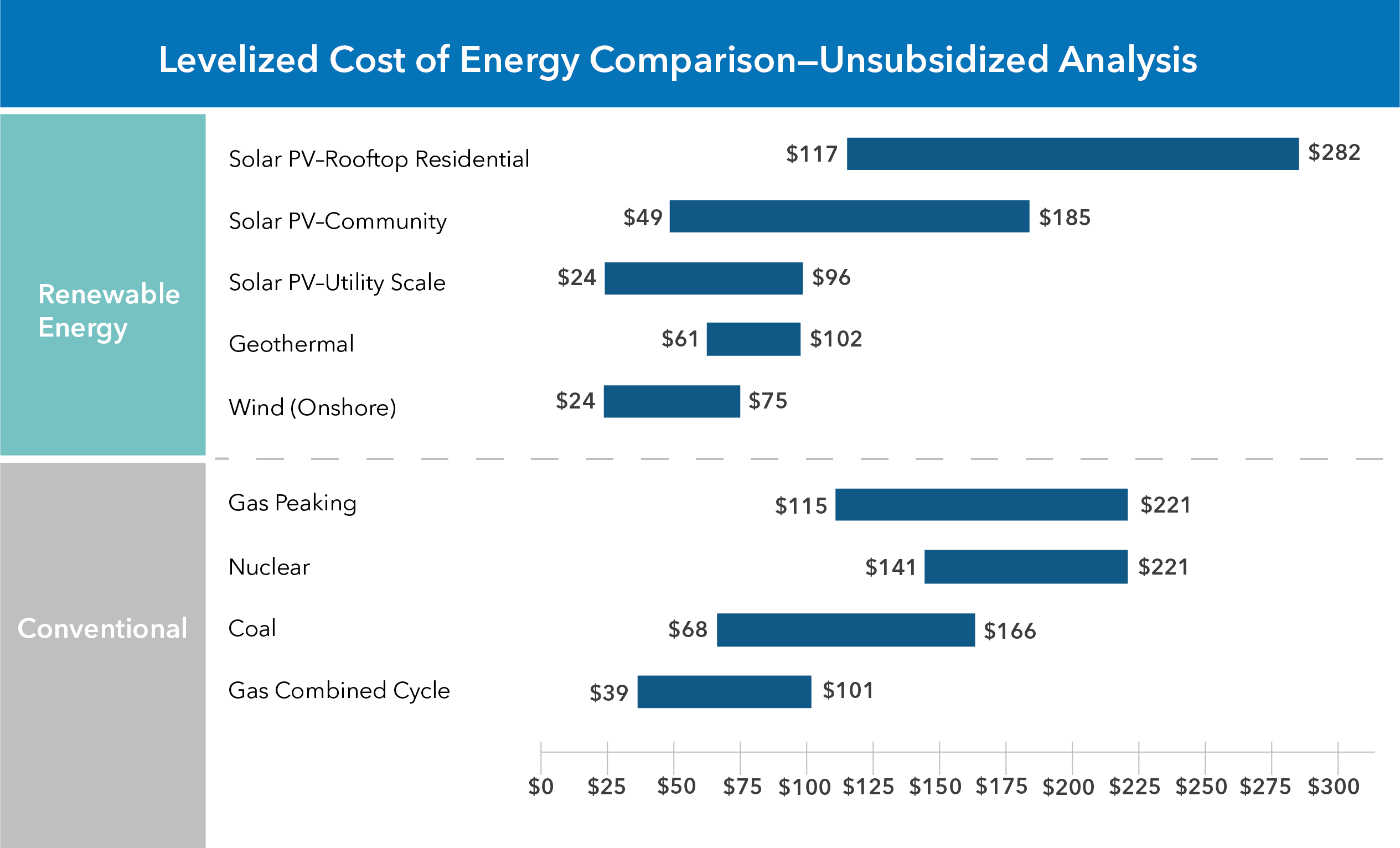
The cost of electricity from solar has dropped by 90% since 2009, and it is now among the cheapest sources of electricity in many places across the United States.2 Utility-scale renewable energy prices are now significantly lower than those for coal and gas generation, and they are less than half the cost of nuclear. Building new utility-scale solar energy generation is even cheaper than continuing to operate existing coal plants. By adding more solar energy to their systems, utilities can help make sure that the consumer costs of energy remain stable, since solar farms are not affected by fluctuating fuel prices."
Fact: Solar energy is proven and reliable.
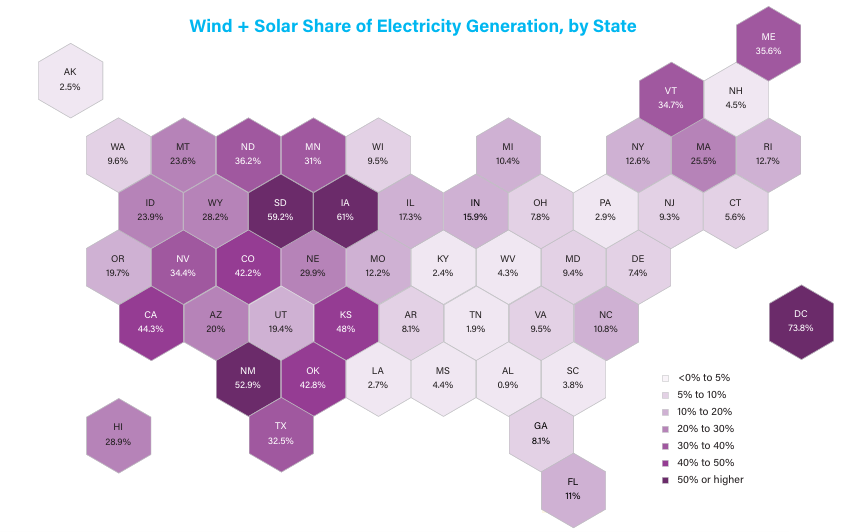
Although solar energy is only generated during the day, solar power production helps reduce peak demand, generating maximum output on hot summer days. Daily solar generation is predictable, and when it is paired with energy storage, excess electricity can be preserved for later use. Eleven states—Arizona, California, Colorado, Hawaii, Maine, Massachusetts, Nevada, New Mexico, Rhode Island, Utah, and Vermont—each generated more than 10% of their electricity from solar in 2024.5
Fact: All energy sources have incentives.
The U.S. government has a long history of supporting the development of electricity generation technologies, fuel production, and improving our electric grid. Between 1950 and 2016, 65% of all energy subsidies went to conventional fuel sources (coal, gas, and nuclear).8 Today, wind and solar projects are eligible for either the investment tax credit (ITC) or the production tax credit (PTC). Unlike a grant or direct subsidy, these tax credits reduce income tax obligations for wind or solar project owners based on the amount of energy produced or the overall capital cost of the project.
To qualify for these credits, projects are required to meet prevailing wage and apprenticeship requirements. In addition, projects can qualify for improved credits if they use wind turbines or solar panels that are manufactured in the United States. The increased industry demand for domestically made equipment is driving new investment in U.S. manufacturing capacity and creating manufacturing jobs. These incentives are being phased out for wind and solar projects starting construction after 2027.
Tax credits for energy are not unique to wind and solar. The PTC remains available to many other sources of energy, including nuclear, geothermal, and hydroelectric power through 2033.
In recent years new incentives have been offered to the coal industry, which has generally lost ground to cheaper sources of energy like natural gas and renewables. These subsidies include new federal tax credits for coal production, reduced royalty rates for coal extracted from public lands, and direct subsidies to coal companies via federal grants.
Fact: Well-sited solar farms can improve biodiversity and local habitat.
Studies show that, in addition to helping displace harmful emissions produced by fossil fuel generation, photovoltaic solar energy facilities can improve biodiversity and benefit wildlife by improving habitat in their immediate vicinity. With proper planning, solar farms can enhance the local environment by naturalizing areas around solar facilities, protecting existing wildlife habitat, increasing pollination, improving water cycling, increasing erosion control, and even helping threatened species. Solar farms can also help create new habitat, providing pollinator-friendly ecosystems and high-quality hunting and foraging habitat for birds.
Fact: Solar energy is one of the world's healthiest sources of electricity.
Unlike other energy sources, solar energy does not produce emissions that may cause negative health effects or other environmental damage. Solar farms produce lower electromagnetic field exposure than most household appliances, such as TVs and cell phones, and numerous studies have concluded that solar panels are not linked to any adverse human health issues. On the contrary, they have proved beneficial to human health by displacing the air pollution caused by fossil fuel electric generation, conserving clean water, and reducing the harmful impacts of climate change.
Fact: Solar farms have little to no impact on property values.
It is a common misconception that ground-mounted solar farms decrease nearby property values. Multiple studies have found that the value of properties near solar farms increased after installation of the facilities. Appraisal studies spanning multiple states have found that even properties adjoining solar farms match the value of similar properties that do not border solar farms within 1%.
Fact: Solar energy is not a driver of farmland loss.
Although utility-scale solar projects require several hundred acres of land and can displace traditional agricultural uses, solar projects do not permanently alter soils or agricultural potential. The land can remain viable for farming, grazing, or other uses when and if solar facilities are removed at the end of the lease term. In some cases, dual-use practices can enable solar projects to double as grazing land, utilize agrivoltaics to harvest crops, or incorporate pollinator habitat, which can help increase nearby crop yields.5
In the meantime, solar farms generate a constant flow of revenue and can act as a reliable, drought-resistant "crop" for local farmers and landowners. Access to a consistent annual revenue stream can help farmers keep their land in the family and preserve its agricultural potential for the future.
The presence of solar panels can also protect agricultural land from more permanent alternate uses, such as residential development, which poses a far greater threat to farmland in many parts of the country. According to the American Farmland Trust, over 1.5 million acres of farmland were lost to development each year between 1992 and 2012. By comparison, of the nearly 900 million acres of farmland in the United States, the National Renewable Energy Laboratory (NREL) estimates that solar energy will occupy fewer than one-half of 1% of those acres by 2030.11