Solar Energy Local Benefits
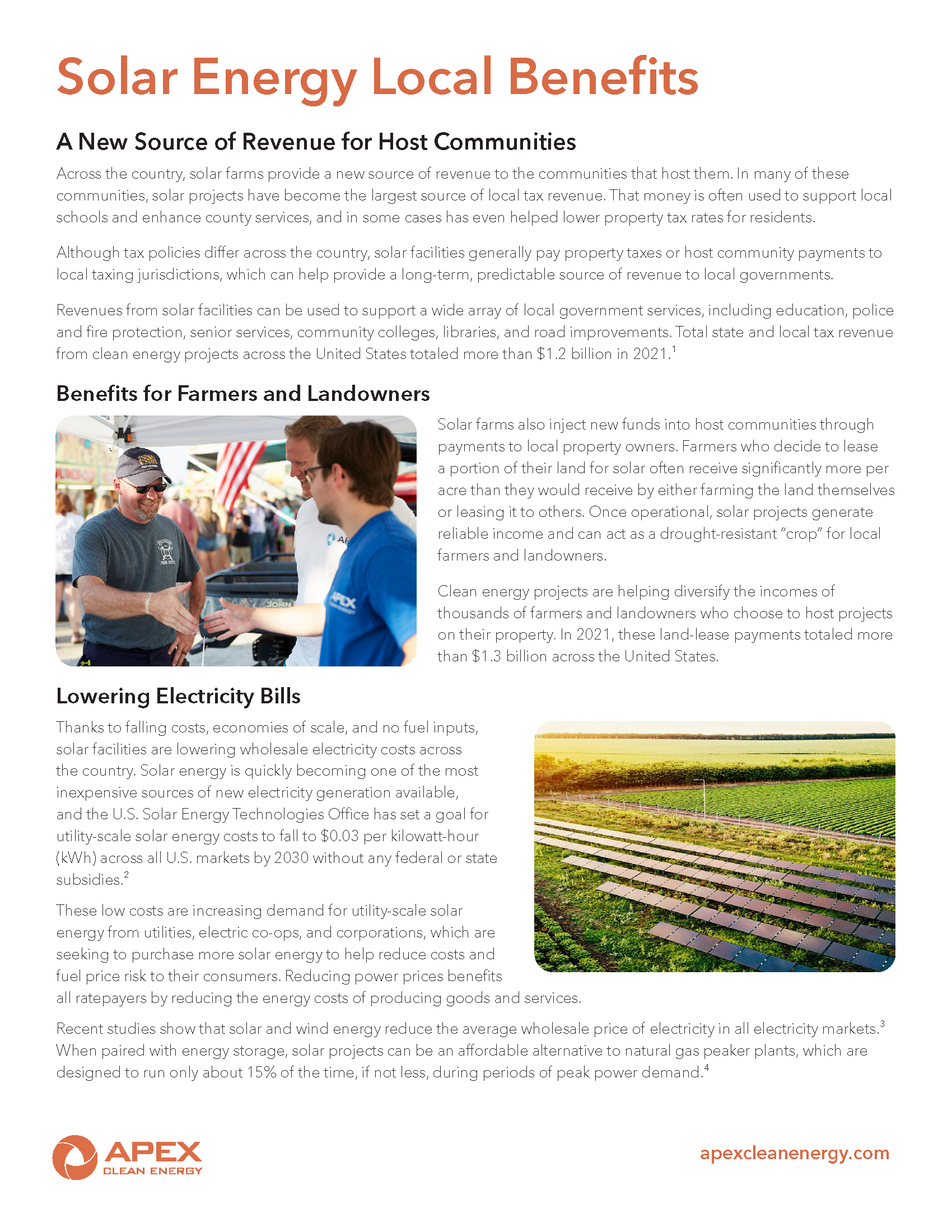
Across the country, solar farms provide a new source of revenue to the communities that host them, supporting local schools, county services, and other community priorities.
A New Source of Revenue for Host Communities
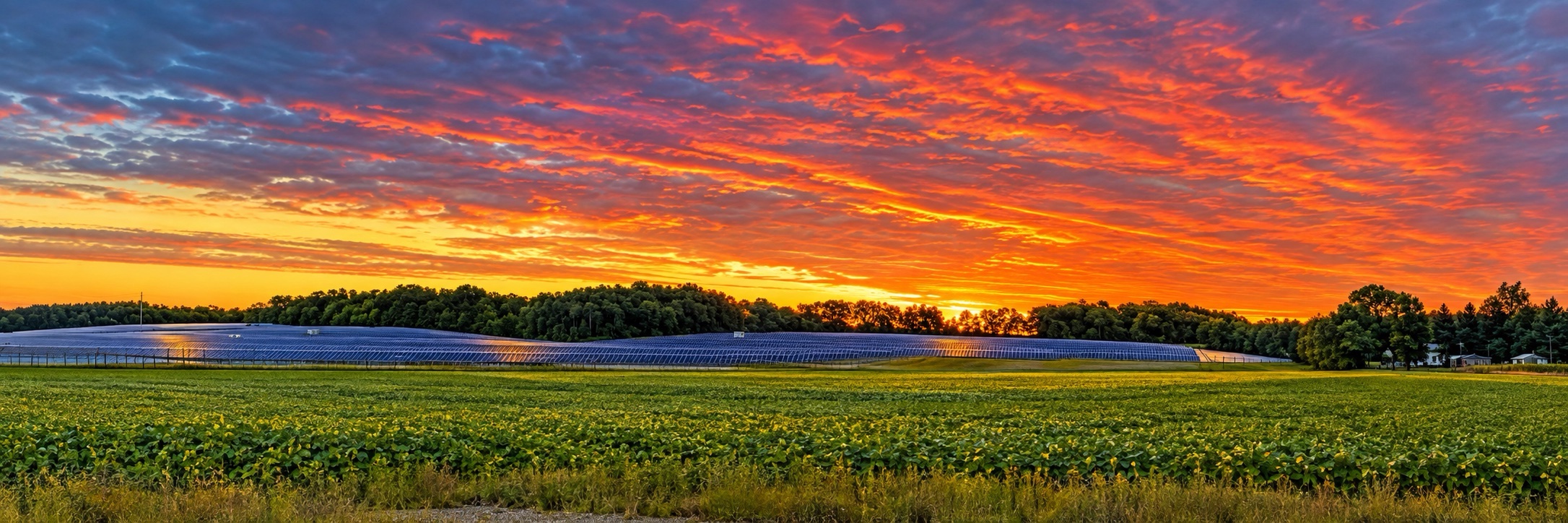
Across the country, solar farms provide a new source of revenue to the communities that host them. In many of these communities, solar projects have become the largest source of local tax revenue. That money is often used to support local schools and enhance county services, and in some cases has even helped lower property tax rates for residents.
Although tax policies differ across the country, solar facilities generally pay property taxes or host community payments to local taxing jurisdictions, which can help provide a long-term, predictable source of revenue to local governments.
Revenues from solar facilities can be used to support a wide array of local government services, including education, police and fire protection, senior services, community colleges, libraries, and road improvements. Total state and local tax revenue from clean energy projects across the United States totaled more than $3 billion in 2025.1
Benefits for Farmers and Landowners
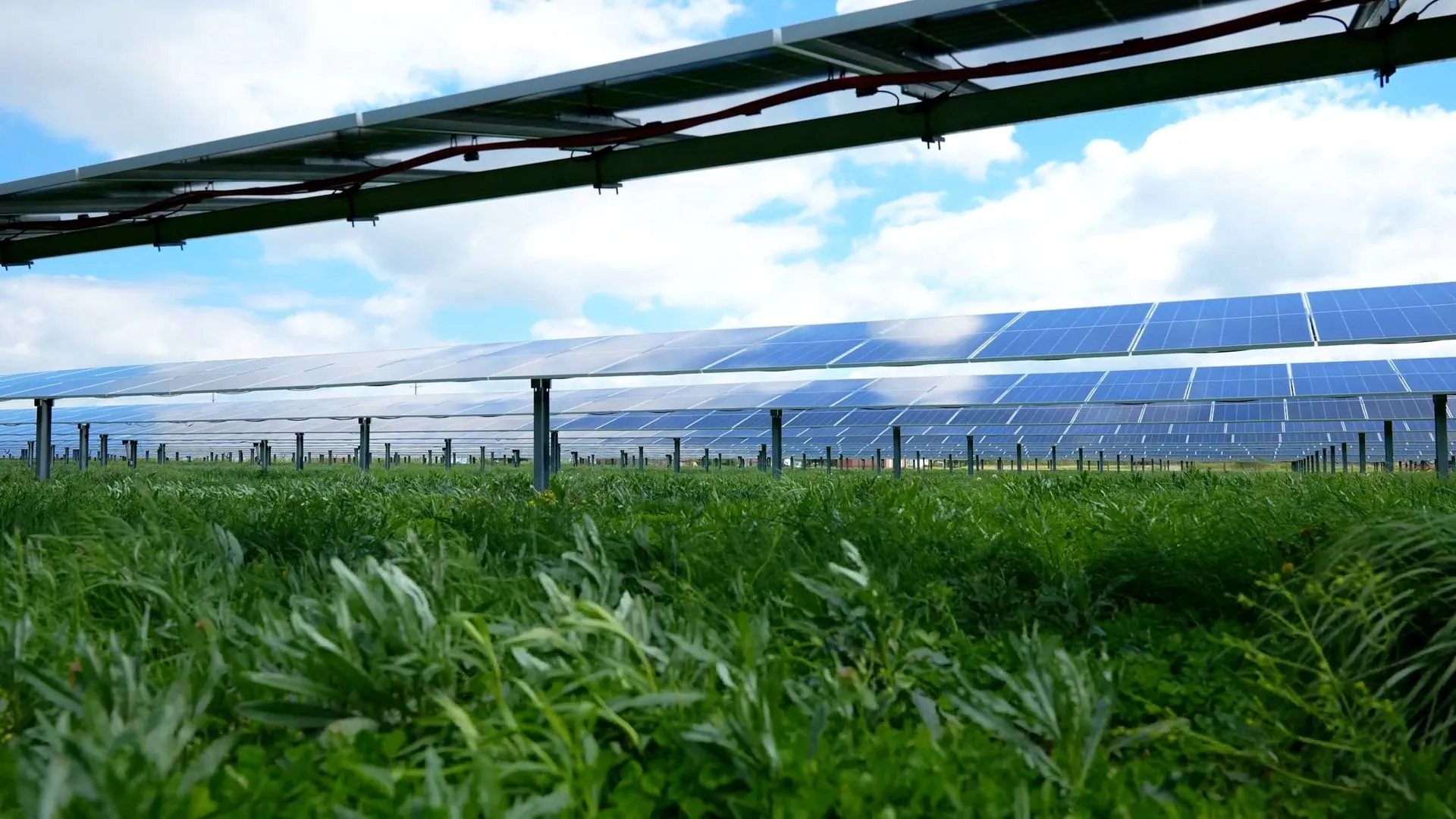
Solar farms also inject new funds into host communities through payments to local property owners. Farmers who decide to lease a portion of their land for solar often receive significantly more per acre than they would receive by either farming the land themselves or leasing it to others. Once operational, solar projects generate reliable income and can act as a drought-resistant "crop" for local farmers and landowners.
Clean energy projects are helping diversify the incomes of thousands of farmers and landowners who choose to host projects on their property. In 2025, these land-lease payments totaled more than $3.2 billion across the United States.
Lowering Electricity Bills
Thanks to falling costs, economies of scale, and no fuel inputs, solar facilities are lowering wholesale electricity costs across the country. Solar energy is quickly becoming one of the most inexpensive sources of new electricity generation available, and the U.S. Solar Energy Technologies Office has set a goal for utility-scale solar energy costs to fall to $0.03 per kilowatt-hour (kWh) across all U.S. markets by 2030 without any federal or state subsidies.2
These low costs are increasing demand for utility-scale solar energy from utilities, electric co-ops, and corporations, which are seeking to purchase more solar energy to help reduce costs and fuel price risk to their consumers. Reducing power prices benefits all ratepayers by reducing the energy costs of producing goods and services.
Recent studies show that solar and wind energy reduce the average wholesale price of electricity in all electricity markets.3 When paired with energy storage, solar projects can be an affordable alternative to natural gas peaker plants, which are designed to run only about 15% of the time, if not less, during periods of peak power demand.4
Solar Energy Creates Jobs
Since 2011, the number of solar energy jobs in the United States has more than doubled. The solar industry now employs about 260,000 workers5 in more than 40 solar-related job classifications—more than five times as many jobs as exist in coal mining—and this number is only expected to grow in the coming years.6
Renewable energy jobs are among the fastest-growing employment opportunities in the country, with solar photovoltaic installer consistently ranked among the top 20 fastest-growing occupations and the total number expected to grow by 42% over the next decade. Solar power jobs are also higher-paying jobs; the annual mean wage for solar installers is $51,860.7
Solar Energy Ecosystem Benefits
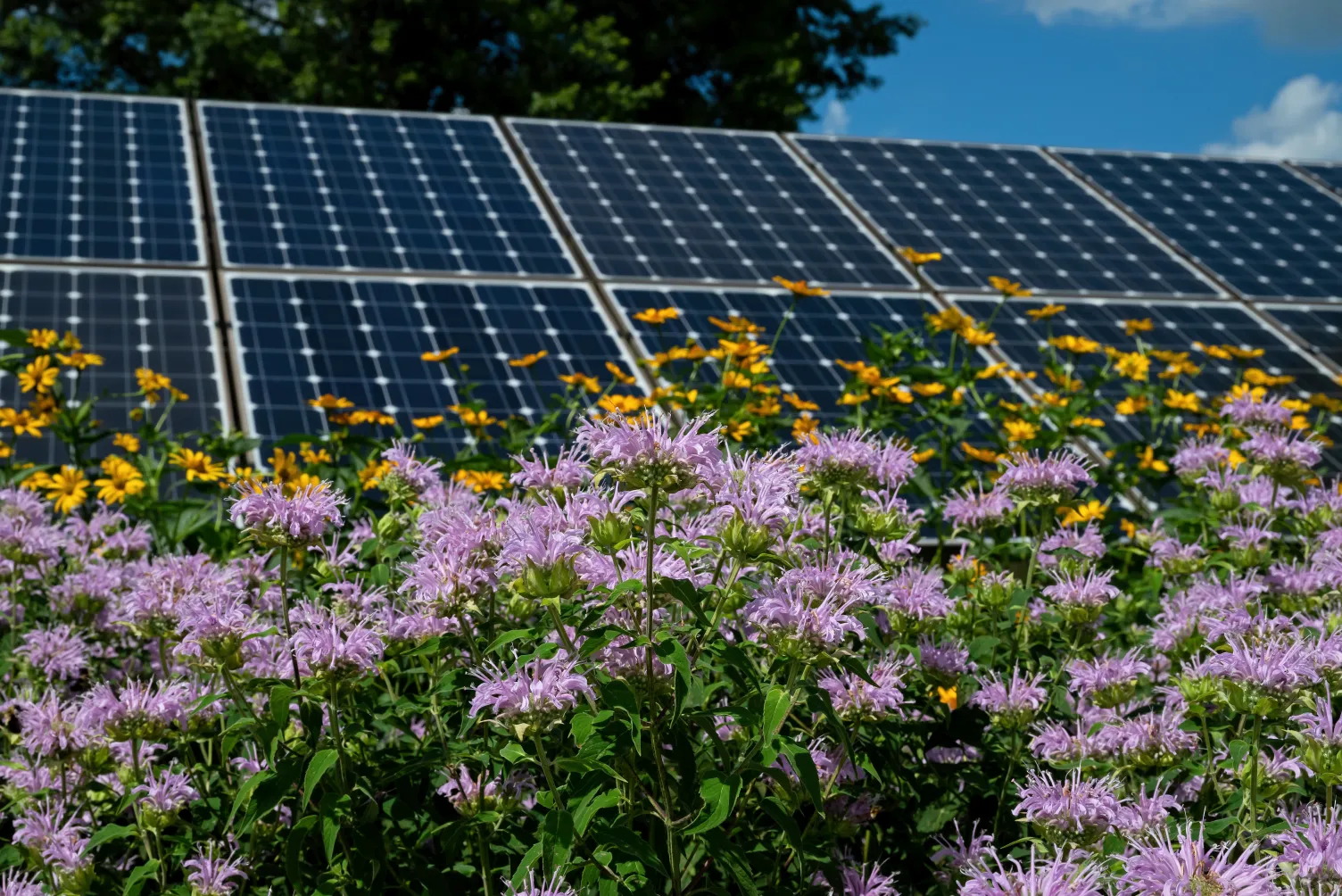
Utility-scale solar projects can be designed to have very limited impact on the underlying land. Once installed, about half of the land within the solar project remains open space. This open area between panels will be seeded with noninvasive ground cover that may include pollinators, grazing grasses, or other native plants. Trees and shrubs may also be planted in accordance with local requirements.
Studies show that in addition to helping displace harmful emissions produced by fossil fuel generation, photovoltaic solar energy facilities can improve biodiversity and benefit wildlife by improving habitat in their immediate vicinity, especially on previously disturbed land.
With proper planning, solar farms can improve the environment and enhance local ecological services by naturalizing areas around solar facilities, improving wildlife habitat and water cycling, increasing pollination and erosion control, and even helping threatened species.
Solar farms can also help create new habitat, providing pollinator-friendly ecosystems and high-quality hunting and foraging habitat for birds.8 Although solar panels may modify wildlife habitat in the facility's immediate footprint, evidence suggests that these changes can be balanced by other habitat-based benefits.
Clean energy projects are helping diversify the incomes of thousands of farmers and landowners who choose to host projects on their property.In 2025, these land-lease payments totaled more than $3.2 billion across the United States. (American Clean Power Association 2025 Clean Power Market Report)